Anyone who doesn’t love a Russian banya has simply never actually been in one!
The traditional Russian stove can be considered the prototype of the banya. The large firebox (approximately 50-60 cm high and 150 cm deep) allowed even an adult to steam in it.
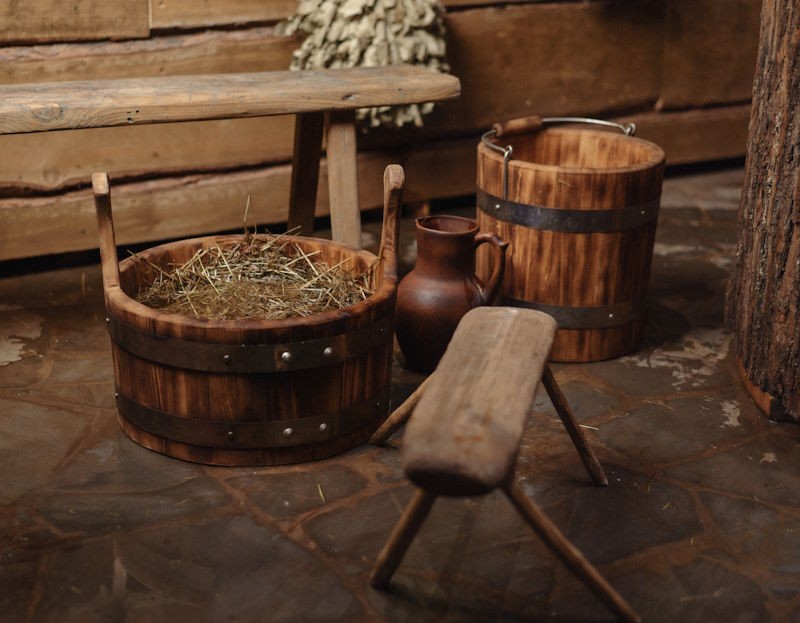
After cooking, the firebox was cleared of soot and ash, straw was laid on the bottom, and a tub of water was placed to sprinkle the walls. Then, people climbed inside and began to steam.

The steam bath ended with an invigorating contrast—dousing oneself with cool or ice-cold water. This cooled down after overheating, shook off drowsy relaxation, and strengthened one’s health.
Then, full-fledged bathhouses made of chopped logs appeared, and later, brick ones. The earliest written references to steam baths that have survived to this day date back to the 10th century and are found in the «Tale of Bygone Years.» The first mention of a brick bathhouse can be found in the chronicle of Pereslavl, dated 1090.
The general features of the bathhouse have changed little since then, but the same cannot be said about the traditions.
Bathhouses were built near bodies of water. This allowed for quicker fetching of water and improved health by plunging into cold water after warming up. If there was no body of water nearby, people would pour well water over themselves or rub themselves with snow after the steam room.
Slavic Banya (Black Banya)
Slavic banyas are an example of true minimalism. There was no room for anything superfluous:
a small wooden log structure with a small window right under the ceiling,
a canopy above the door,
a supply of dry firewood and a place for clothes underneath,
there was only one room inside the log structure,
a chimneyless fireplace in the center with stones laid on it.
This type of banya is still common today. Some follow the same Slavic traditions when building, while others build in a modern style. One thing remains constant: the absence of a chimney.
The smoke in this type of banya spreads throughout the steam room, evenly warming and disinfecting the room. Soot settles on the walls, gradually turning them coal-black. This is why the kindling is called «po-chernomu.»
The banya is heated with the doors and window slightly open. Once the room has warmed up and the stones on the stove have reached red-hot, the burnt-out coals, embers, and ashes are removed from the steam room. No new wood is added.
The doors and windows are tightly closed, and the banya is left to stand for an hour and a half. During this time, the banya will warm up well, and the smoke will have completely cleared out.
Traditional Russian Banya
The canonical Russian banya is the «po-chernomu» steam bath, which became widespread with the invention of the banya chimney. It was then that the banya’s area increased: a changing room, a washroom, a steam room with benches, and a stone stove were added.
Stones were heated on the stove, and a deep tub or barrel of water stood nearby. Dried herbs were hung in the corners, imparting their unique aromas to the Russian banya. Steam was created by pouring water, herbal infusions, birch infusion, or kvass onto the hot stones.
Benches were located along one wall—rests for the person taking or receiving the steam. Fragrant herbs, hay, and clean linen were placed on the shelves.
Today, this tradition is being revived, for example, by the masters at the «Kurnaya Izba» bathhouse of the Siberia bath complex. It smells of herbal infusions, and the shelves are covered with meadow hay. Meanwhile, the «Taiga Izba» bathhouse in Siberia exudes a rich pine aroma, and the shelves are lined with soft fir branches.

Key Features of a Russian Banya
A traditional Russian banya is a room with several zones: a dressing room, a washroom, and a steam room with a stove. The dressing room is where people relax between steam sessions, receive a massage, and refresh themselves with cool fruit drink or kvass. The washroom is where they perform various hygiene procedures and catch their breath between steam room sessions.
The door to the steam room is usually small and has a threshold: this design prevents steam from escaping. To ensure a gentle steam, the banya maintains a temperature of 45 to 70 degrees Celsius, with humidity at 60%. These conditions provide a comfortable and safe steam experience for both adults and children. Higher temperatures and humidity, however, can result in a scalding, oppressive steam. Another tradition of the Russian banya, which distinguishes it from most banyas in other countries, is the use of birch branches.
Another tradition of the Russian banya, which distinguishes it from most banyas in other countries, is the use of birch branches.

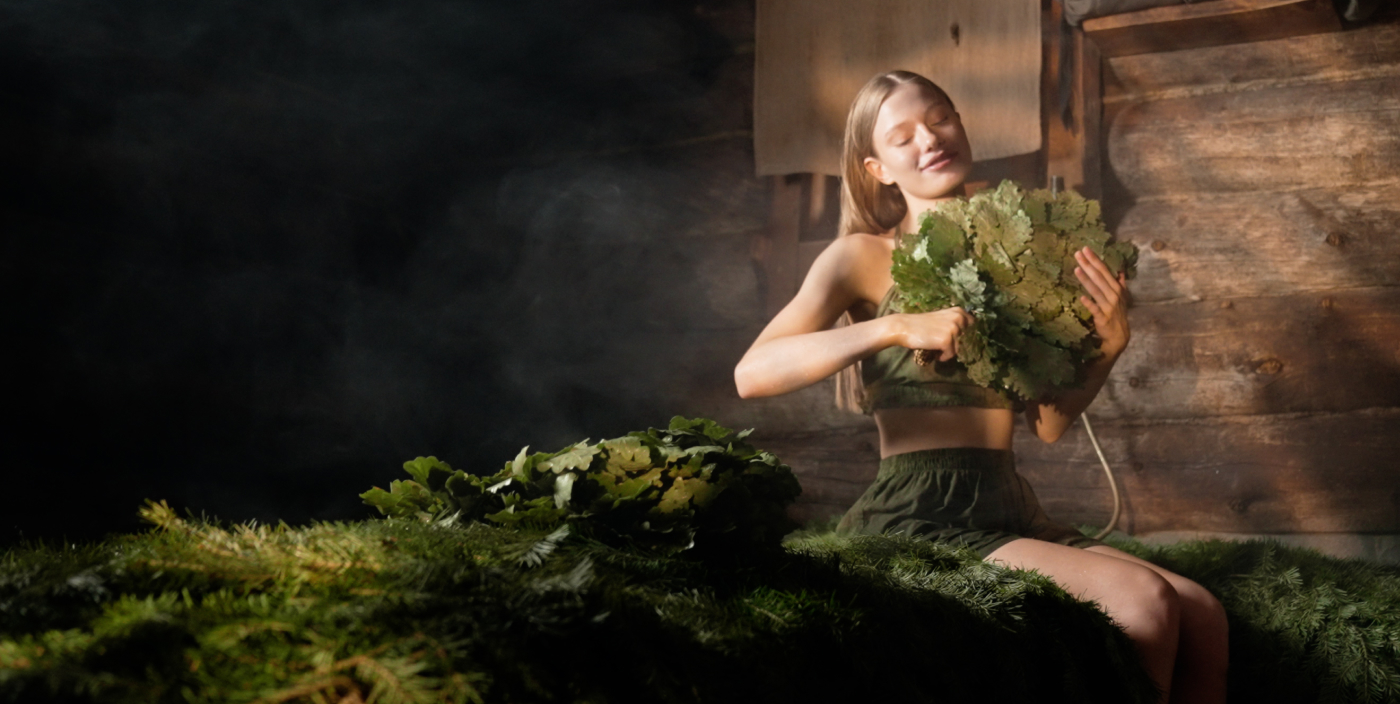
Brooms are made from birch, oak, linden, nettle, juniper, and even fir branches! This diversity not only creates different sensations and aromas, but also has different effects on the body. For example, a juniper broom improves circulation, relieves fatigue and muscle pain; a birch broom soothes the skin, making it more elastic and smooth, and helps with joint and muscle pain.
Self-massage with a bath broom is a pleasure, and a steam bath, in the hands of professionals, provides an unforgettable experience and ultimate relaxation. At the Siberia bath complex, steam masters can steam you with four or even eight hands, give you a massage, warm your feet, and help you relax your back. After such an activity, you always feel completely recharged, your head becomes clear and refreshed. Russian Bathhouse Traditions and Superstitions
The Russian people had many customs and superstitions associated with the banya. The most famous tradition of the Russian banya, which has survived to this day, is the banya itself. In Rus’, after Vladimir’s baptism, people went to the banya on Saturdays, before Sunday services, so as to arrive at church the next morning clean of both body and soul.
Sunday, however, was considered a forbidden day for visiting the banya. Missing the liturgy was forbidden, as was working (it was believed that those who worked on Sunday would be punished by God). Preparing the banya can, without exaggeration, be called hard work—chopping wood, carrying water, heating the stove.
Before Epiphany, Slavs didn’t go to the bathhouse on Mondays, as that day belonged to Bannik, the spirit and master of the bathhouse. Disturbing the spirit was dangerous: he could become angry and scald you with boiling water. On other days, when going to the bathhouse, people tried to appease the spirit in every possible way. They brought him a piece of black bread sprinkled with coarse salt, a container of water, soap, and an unused whisk. When leaving the steam room, they thanked Bannik for the gentle steam.
The whole family would steam in the house bathhouse, without any embarrassment. Even in public bathhouses, men and women steamed together for a long time. Separation only appeared in the 18th century. Then, Catherine II adopted the Charter of Decency, prohibiting people of the opposite sex from visiting public baths together. The ban also applied to children over 7 years old.
No wedding ceremony took place without a visit to the banya. It was believed that the bathhouse ritual washed away the bride’s former maiden life and protected her from witchcraft. Russian banya traditions prescribed heating the bride’s bathhouse with wood taken from the groom’s house or using soap given to her by the future husband.
In some regions, the bride was washed and steamed by the groom’s female relatives before the wedding. They judged the health and physical strength of the future relative by her appearance. In other areas, the bride went to the banya with her friends. The girls divined the character of the groom and his relatives and performed rituals to bewitch her lover. To ensure fertility, the bride was steamed with a birch broom with the addition of fruit tree branches.
In the old days, people gave birth in the banya, too, as this room was the most sterile (especially if they heated it «black») and warm: there was no fear of the baby catching a cold, even in severe frost. A special plus was the pleasantly warm water used to wash the newborn.
The healing properties of the Russian banya
After washing, it’s like being born again!
The Russian banya played a significant role in folk medicine, and it was considered almost the only way to cure any ailment. Today, we consider the banya more a place for relaxation and intimate conversation than a healer, but modern evidence-based medicine also recognizes the positive effects of steaming on the human body.
Visiting the steam room and warming up the body, followed by dousing or immersion in cold water, strengthens the immune system.

After just 20-25 minutes in a sauna, the red blood cell count naturally increases. Steaming with a birch whisk improves metabolism, helps with lymph and blood stagnation, rheumatism, and muscle tension. It gently and non-violently relaxes the body, and at the same time, the mind becomes lighter due to the increased fluid circulation, the lungs open wider, and familiar pain and tension disappear. However, there are contraindications. You should avoid a hot sauna if you have:
oncology;
thrombophlebitis;
cardiovascular diseases;
an infectious disease in the acute stage;
acute inflammatory gynecological diseases.
Elderly people and pregnant women should exercise caution when visiting the banya: watch the time in the steam room, avoid extreme temperature differences, and drink plenty of water or fruit juice.
Conclusion
The traditions of the Russian banya date back centuries. Some of them evoke a condescending smile today, while others have survived to this day, testifying to their importance and benefits. As in the past, the banya for Russians is more than just a place to wash; it is a space for relaxation and meeting with friends and colleagues. It is a way to experience that state of mind when the world becomes safe, the people around you feel like family, and your body feels full of energy.
Today, the banya is a fairly common practice, considered routine in both cities and villages. But there are places that can pleasantly surprise even seasoned fans of the Russian banya. For example, in Moscow, you can visit the public Sanduny Baths, preserved since the 18th century, or the craft baths of Siberia, which have recreated the best traditions and unique atmosphere of the Russian banya.
At the Siberia bath complex, we have made every effort to revive the finest bathing traditions. Spacious baths with the inimitable aroma of herbs, a Russian stove, an in-house kitchen, and the finest Siberian products await you in the center of Moscow. All our materials, tools, and products are of the highest quality and made in Russia.
Each guest receives a unique steaming experience. We pay attention to detail, listening to your condition and wishes, to give everyone a feeling of absolute happiness and value.